

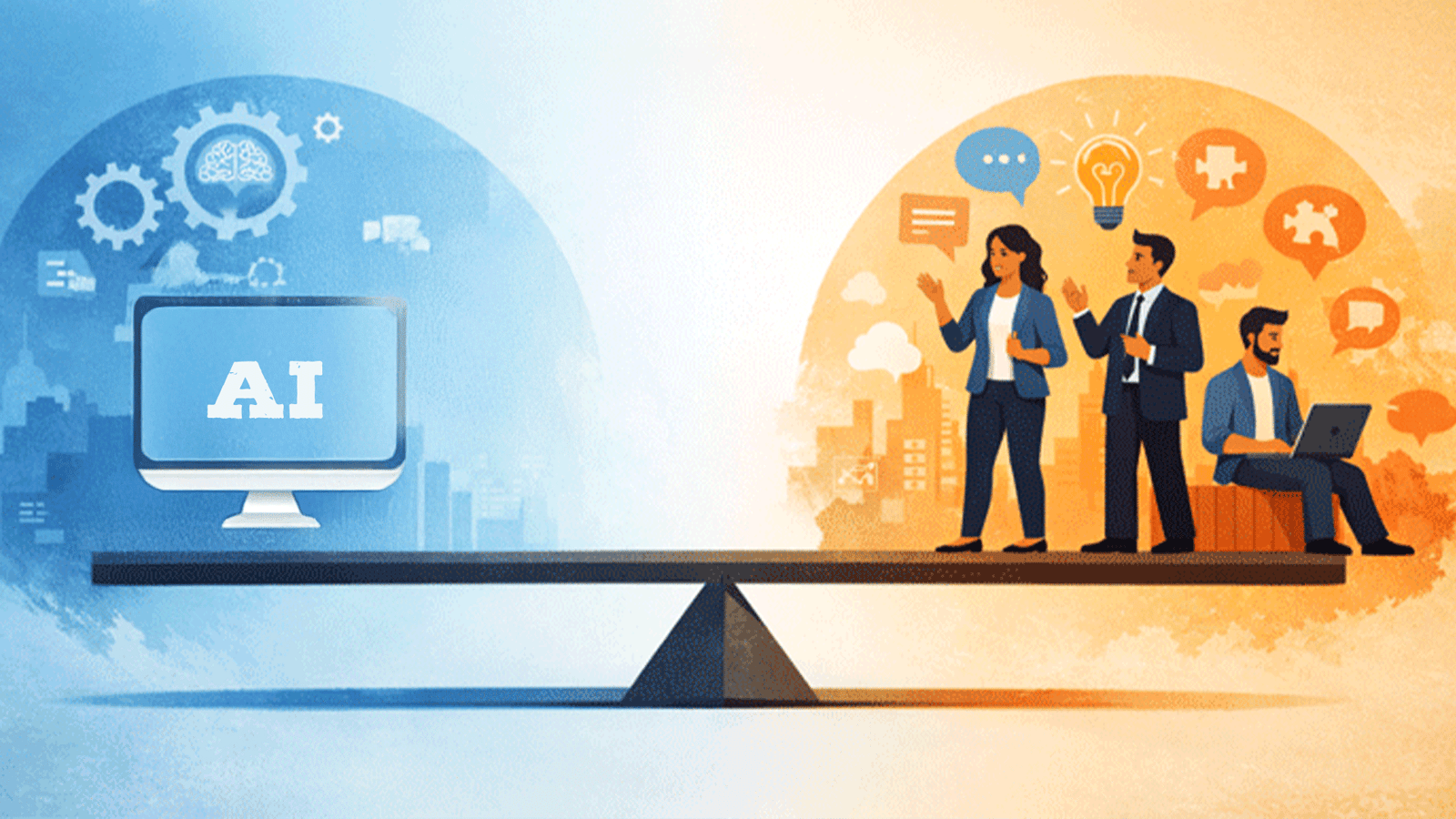
Artificial Intelligence is transforming the modern workplace faster than ever before. From automating repetitive tasks to generating content, analyzing data, and assisting in decision-making, AI has become a powerful tool across industries. Businesses today are increasingly adopting AI to improve efficiency, reduce costs, and accelerate innovation.
However, despite these technological advancements, one thing remains irreplaceable — human skills.
While AI can process information and automate workflows at incredible speed, it still lacks the emotional intelligence, creativity, ethical judgment, and human connection that people bring to the workplace. In the AI-driven era, technical skills may open doors, but human skills are what truly drive leadership, collaboration, and long-term business success.
AI Can Automate Tasks, But Not Human Understanding
AI is excellent at handling structured and repetitive work. It can analyze trends, generate reports, schedule workflows, and even assist with customer support. But understanding human emotions, building trust, and making nuanced decisions still require people.
For example, customer service chatbots can instantly answer FAQs and solve basic issues. But when a frustrated customer faces a complex problem, human empathy and communication become critical. A calm conversation with a skilled support executive can often save a customer relationship in ways AI cannot.
This is why many businesses now use AI as a support tool rather than a replacement for human interaction.
Creativity Still Belongs to Humans
AI can generate designs, write articles, and suggest ideas based on existing data. But true creativity often comes from human experiences, emotions, imagination, and cultural understanding.
Consider the advertising industry. AI tools can create multiple ad variations within seconds, but successful campaigns still rely on human creativity to connect emotionally with audiences.
A great example is the “Share a Coke” campaign by Coca-Cola. The campaign succeeded because it created a personal emotional connection with consumers. AI may help optimize future campaigns, but the original creative concept required human insight and emotional intelligence.
Similarly, in technology companies, AI can assist developers with coding suggestions, but product innovation still depends heavily on human problem-solving and vision.
Leadership and Decision-Making Require Emotional Intelligence
Workplaces are built around people, not just processes. Strong leaders understand team dynamics, motivate employees, manage conflicts, and make ethical decisions — areas where AI still has significant limitations.
During the global shift to remote work, many companies realized the importance of empathetic leadership. Managers who regularly communicated with employees, understood personal challenges, and maintained team morale were more successful than those relying only on productivity metrics.
AI can provide performance data, but it cannot replace the emotional intelligence required to inspire and lead teams during uncertain times.
Human Judgment Matters in Critical Situations
AI systems are only as good as the data they are trained on. They can sometimes produce biased, inaccurate, or incomplete outcomes. Human oversight remains essential, especially in high-stakes industries like healthcare, finance, law, and cybersecurity.
For example, AI may help doctors analyze medical scans faster, but final diagnoses and treatment decisions still require experienced medical professionals who can consider emotional, ethical, and situational factors.
Similarly, in recruitment, AI tools can screen resumes quickly, but hiring the right candidate often depends on evaluating personality, communication skills, adaptability, and cultural fit — areas where human recruiters play a crucial role.
Collaboration and Communication Are More Valuable Than Ever
As automation handles more technical and repetitive work, soft skills are becoming even more important in the workplace. Companies today actively seek professionals who can:
- Communicate effectively
- Collaborate across teams
- Adapt to change
- Solve problems creatively
- Think strategically
- Build strong client relationships
In many ways, AI is increasing the value of uniquely human abilities rather than reducing it.
For instance, a software developer today may use AI tools to write code faster, but success still depends on understanding client requirements, collaborating with designers and product managers, and creating user-focused solutions.
The Future of Work Is Human + AI
The future workplace will not be about humans competing against AI. It will be about humans working with AI.
Businesses that combine advanced technology with strong human talent will have the greatest advantage. AI can improve efficiency and automate processes, while people bring creativity, empathy, leadership, and strategic thinking.
Organizations are now looking for professionals who not only understand technology but can also communicate ideas, lead teams, and adapt in rapidly changing environments.
At QuantumCorrp, we believe the future belongs to companies that successfully balance technology with human expertise. As businesses continue evolving in the AI era, skilled professionals with strong technical and interpersonal abilities will remain at the center of innovation and growth.
Conclusion
AI is undoubtedly reshaping industries and redefining the future of work. But despite its capabilities, technology cannot replace the human qualities that drive trust, creativity, leadership, and meaningful relationships.
The most successful workplaces of the future will not rely solely on automation. They will empower people to use AI as a tool while continuing to value the uniquely human skills that machines cannot replicate.